The Halo hybrid fractional laser marked a turning point in skin resurfacing — pairing ablative and nonablative energy in a single treatment to deliver the kind of correction once reserved for aggressive lasers, with only a few days of recovery. For patients across New York seeking brighter, smoother, more even skin without extended downtime, it remains one of the most versatile resurfacing options available.
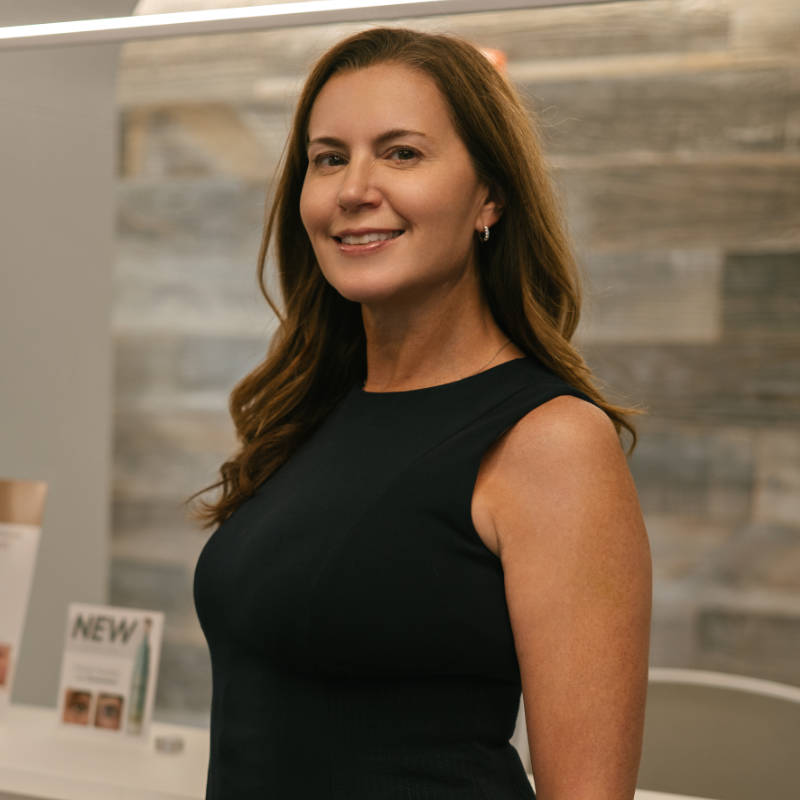
Halo treatments are performed under the direction of Christine Blaine, M.D., F.A.C.S., a board-certified plastic surgeon trained at Albany Medical College and a recipient of the Brandon Macomber Award. An early adopter of Halo technology since 2015, Dr. Blaine has built more than a decade of laser experience into the protocols used at her Midtown NYC, Huntington, and Staten Island offices.
Dr. Blaine’s Approach to Laser Resurfacing
Dr. Blaine treats laser resurfacing with the same care and precision as any surgical procedure, emphasizing that the technology and the training behind it matter equally. Her team customizes every Halo treatment to a patient’s skin and the recovery they can realistically accommodate.
“A laser is only as good as the judgment behind it — we treat every resurfacing session with the same precision we bring to surgery.” — Dr. Christine Blaine
What Is the Halo Laser?
The Halo is a hybrid fractional laser that delivers two complementary wavelengths — one ablative, one nonablative — to the same microscopic treatment zones. Working together, they create a synergistic effect that resurfaces the skin’s surface while stimulating collagen in the deeper layers. The controlled thermal injury triggers a natural wound-healing response that replaces damaged, aged skin with fresh tissue and new collagen, reducing the appearance of sun damage, uneven tone, and rough texture.
For patients who want to address even more of the skin’s architecture in a single session, the practice also offers the next-generation Sciton HALO Tribrid, which adds a third wavelength for deeper structural renewal.
What Halo Treats
Halo is well suited to a range of common skin concerns:
- Irregular pigment — brown spots, age spots, sun damage, and uneven tone.
- Fine lines and wrinkles — including crepe-like texture and early signs of aging.
- Dull, dry complexion — restoring brightness and a healthy glow.
- Textural irregularities — such as acne scars and enlarged pores.
The best candidates are men and women in good general health who want fresher, clearer skin and can accommodate a few days of social downtime.
What to Expect
Treatment begins with facial imaging to map both visible and underlying skin concerns, followed by a numbing cream applied for 30 to 45 minutes for comfort. The laser is then delivered pulse by pulse across the treatment area, with settings tailored to each patient’s skin and downtime tolerance. Comfort options unique to a physician’s office — including Pro-Nox and a Zimmer Chiller that directs cold air to the treatment zone — keep the experience comfortable. Afterward, skin looks red and slightly swollen, much like a sunburn; most patients return to normal activities within three to five days, with fresh, glowing skin emerging over the following weeks.
Frequently Asked Questions About Halo Laser Resurfacing
Halo improves sun damage, discoloration, uneven tone, fine lines, enlarged pores, and rough texture by resurfacing the surface and stimulating collagen below.
Most patients experience redness and mild swelling for three to five days before returning to their normal routine.
Numbing cream, Pro-Nox, and a cooling device are used to keep patients comfortable throughout the session.
Halo uses two wavelengths, while the Sciton HALO Tribrid adds a third for deeper structural renewal in a single session.
Yes — pairing Halo with Plated exosome therapy supports the skin barrier and can shorten recovery.
Skin brightens within the first weeks, while collagen-driven improvements continue to develop over the following months.
Enhancing Halo Recovery with Exosome Therapy
Because Halo works by creating controlled thermal injury, the recovery period is an ideal time to support the skin at the cellular level. Pairing Halo with exosome therapy — using Plated Skin Science before and after treatment — helps calm inflammation, support the skin barrier, and speed healing, so patients recover more comfortably and see their results sooner. Individual results vary.
Why Choose Blaine Plastic Surgery for Halo
- Board-Certified Plastic Surgeon: Treatments are directed by Dr. Blaine, a Fellow of the American College of Surgeons.
- Physician-Office Comfort: Pro-Nox and cooling technology are available only in a medical setting.
- Tailored Treatment Settings: Each session is customized to a patient’s skin and downtime tolerance.
- Regenerative Recovery Support: Exosome therapy can be paired with Halo to speed and smooth healing.
To learn whether Halo laser resurfacing is right for your skin, schedule a consultation with the team at Blaine Plastic Surgery in Huntington or Midtown NYC, and take the first step toward a brighter, more even complexion.